Reducing germs
Reactive oxygen and nitrogen species form in cold plasma. They can damage components of bacteria and thus help reduce the microbial load on the treated wound surface.[1]
Cold atmospheric plasma can complement local treatment, especially for chronic and infected wounds.
At a glance
In chronic or infected wounds, cold plasma can complement treatment. It is applied directly to the wound surface to reduce the microbial load. Wound cleansing and treatment of the underlying condition remain part of care.[3]
Cold plasma is a partially ionized gas. It is created when electrical energy releases individual electrons from atoms or molecules. What makes it special for medical use: the gas remains in a temperature range close to body temperature. Depending on the device, the plasma is generated from ambient air or from another gas such as argon.[3]

Reactive oxygen and nitrogen species form in cold plasma. They can damage components of bacteria and thus help reduce the microbial load on the treated wound surface.[1]
Cold plasma can also influence processes in wound tissue. In chronic diabetic wounds, researchers observed changes in growth factors.[5] In a clinical study, the wound area decreased more with complementary cold plasma treatment than with a sham treatment.[6]
Cold plasma can complement the care of chronic and infected wounds.[2] These include hard-to-heal foot wounds in diabetes and open leg ulcers (ulcus cruris). The S2k guideline describes its use in combination with wound cleansing and treatment of the underlying condition.[3]
The use of cold plasma is also being investigated in inflammatory skin conditions, such as acne and atopic eczema (atopic dermatitis).[3]
One area of use in podiatry practices is nail fungus (onychomycosis). The product page for RUCK ViroCAP cold plasma shows how it is applied to the nail.
Whether cold plasma is suitable for your wound depends on the condition of the wound, the body site and the device used. Inform your care team in advance if you are pregnant or have an active implant such as a pacemaker. Based on the instructions for use, the team checks which restrictions apply to the device.[2]
For ViroCAP med, the manufacturer excludes use in children under twelve and on heavily bleeding wounds. This also applies to wounds on exposed organs, on mucous membranes and in the area of the eyes, mouth and nose.[7]
On sensitive wound surfaces, the application can occasionally be painful. The wound may also temporarily release more fluid. Let your care team know if the application is uncomfortable for you.[3]
If your wound is healing poorly despite treatment, ask your care team whether cold plasma can complement your wound care.
For wound treatment, the S2k guideline gives two to three applications per week as a guide. How often treatment makes sense in an individual case depends on the condition of the wound, the healing progress and the device used.[3]
Trained professionals carry out the treatment according to the specifications for the respective device. Cold plasma complements standard wound care. If dead tissue is present, this may also include its removal, known as debridement.[3]
Costs depend on the treating practice and the scope of wound care. As a guide: the Hauke Cornelsen practice in Hamburg charges €80 for a single cold plasma treatment. As part of its wound treatment, the practice does not charge extra for the application.[8]
Ask your practice for a written cost estimate before you start. Ask which services are included in the price and how many sessions are likely to be needed. Check with your health insurer whether it will cover the costs in your case.
To take with you
The key information on cold plasma therapy as a PDF – for the conversation at your practice or to pass on. Free of charge, no registration required.

For patients
Procedure, areas of use, safety and costs – with a checklist for your doctor’s appointment.
Download PDF (in German)
For healthcare professionals
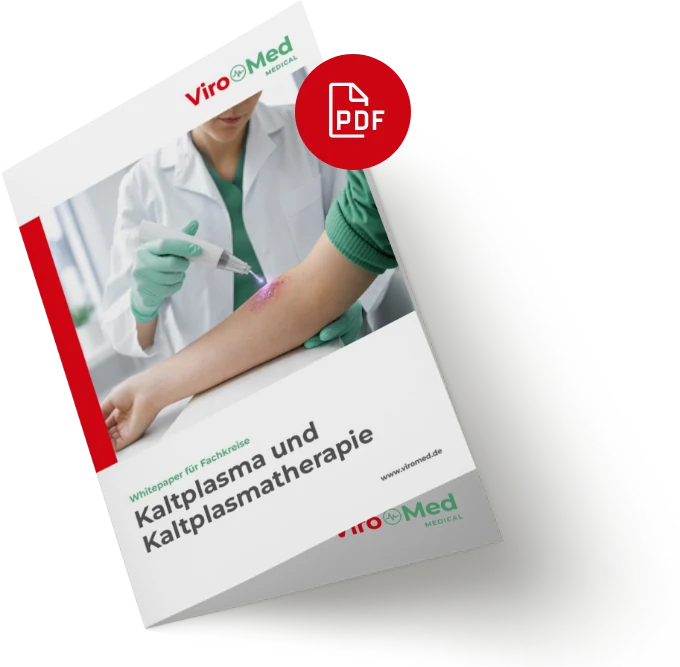
Evidence, indications, application parameters and billing at a glance.
Download PDF (in German)
In a randomized study, people with diabetic foot ulcers received either cold plasma or a sham treatment in addition to standard wound care. With cold plasma, the wound area decreased faster. There was no statistically significant difference between the groups in the reduction of the microbial load.[6]
Together with Viromed, the Leibniz Institute of Photonic Technology examined how 21 clinically relevant bacterial species respond to cold plasma. In the laboratory, the growth of all tested species decreased.[4]
Wound care
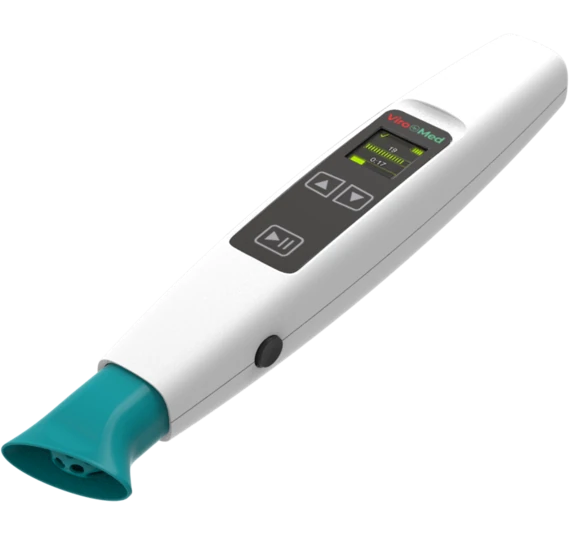
Mobile handheld device for healthcare professionals to support the treatment of wounds and infected skin.
View ViroCAP med
Dermatology
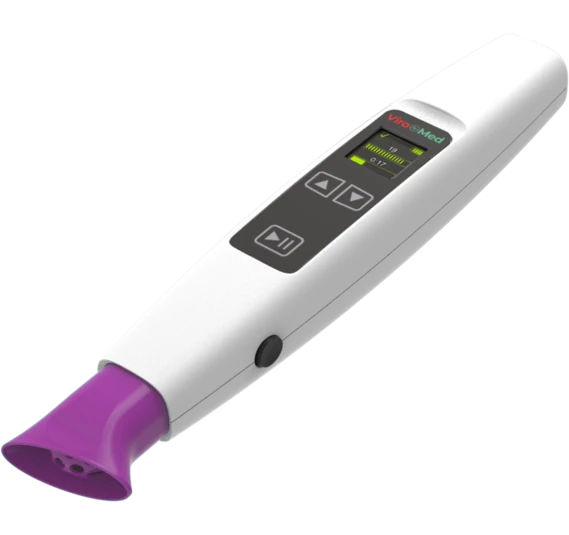
Mobile handheld device for dermatology practices. The product page presents the planned areas of use.
Currently not available to order.
View ViroCAP derma
The treatment is often described as causing little pain. On sensitive wound surfaces, it can feel uncomfortable or hurt briefly. After the application, the wound may temporarily release more fluid.[3]
The duration depends on the size of the treated area and the device used. For chronic wounds, the S2k guideline gives two to three applications per week as a guide. The care team adjusts the appointments to how the wound develops.[3]
For chronic wounds, the care team checks over time whether the wound area is getting smaller. How quickly a change becomes apparent cannot be reliably predicted for an individual wound.[6]
In laboratory experiments, cold plasma was also able to inactivate multidrug-resistant bacteria such as MRSA. For an infected wound, the medical findings determine which treatment is required and whether an antibiotic is also needed.[4]
Small clinical studies have investigated cold plasma for mild to moderate acne. You can discuss with your dermatologist whether complementary use is an option for your skin.[9]
We advise practices, hospitals and care facilities on the use of cold plasma and on our ViroCAP handheld devices.
Phone
Advice
Orders