Alternative to antibiotics: Why physical approaches are changing medicine
Antibiotics are losing their effectiveness worldwide, and new classes of active substances are rare. What alternatives are there for infections of the skin and wounds, what alternatives for infections inside the body, and when do antibiotics remain indispensable?
Key points
- Skin and wounds:Cold plasma inactivates pathogens physically and is used for chronic wounds as an adjunct to wound care. Resistance to it has not been described so far.
- Inside the body:For mild, uncomplicated infections, plant-based active substances can help reduce antibiotic use. Bacteriophages are being researched but have so far rarely been used in Germany.
- Limits:Antibiotics are indispensable for sepsis, severe pneumonia or meningitis.
Why antibiotics are losing their effectiveness
According to a report by the World Health Organization (WHO), about one in six laboratory-confirmed bacterial infections with common pathogens worldwide was resistant to the usual antibiotic treatment in 2023. Between 2018 and 2023, resistance increased in more than 40% of the monitored pathogen–antibiotic combinations.[1] A modeling study published in the journal The Lancet estimates that 1.14 million deaths worldwide in 2021 were directly attributable to resistant bacteria; they were involved in 4.71 million deaths. For 2050, the authors expect 1.91 million directly attributable deaths and 8.22 million deaths involving resistant bacteria.[2]
New antibiotics with a novel mechanism of action rarely come onto the market. This is why attention is also turning to methods that work differently: physical methods such as cold plasma for infections of the skin and wounds, plant-based active substances and bacteriophages.
How resistance develops
Antibiotics act specifically on the metabolism of bacteria. For example, they block the formation of the cell wall, as penicillin does, or inhibit the production of proteins. This effect is highly specific, and therein lies a weakness: even a small change at the target site can render an antibiotic ineffective.
Bacteria multiply quickly, and random mutations keep occurring in the process. Resistance genes can also pass from one bacterium to another. Every use of antibiotics exerts selection pressure. It is intensified above all by two factors:
Drivers of resistance
- Misuse in human medicine:Antibiotics are often prescribed unnecessarily, for example for respiratory infections caused by viruses, against which they are ineffective. There is also room for improvement in hospitals: in ten hospitals in Baden-Württemberg, one third of patients received antimicrobial agents, and many quality criteria for prescribing were rarely met.[3]
- Use in livestock farming:Resistant bacteria and antibiotic residues enter the environment and the food chain via excrement, liquid manure and food and can be transmitted to humans.[4]
During antibiotic treatment, the pathogens that happen to have a defense mechanism survive and continue to multiply. For example, they produce enzymes that break down the antibiotic or alter their target site so that the active substance no longer binds. A well-known example is methicillin-resistant Staphylococcus aureus (MRSA).
Antibiotics and the microbiome
Antibiotics given as tablets or infusions act throughout the body. They affect not only pathogens but also the beneficial bacteria of the intestinal and skin flora. In the gut, they reduce species diversity and promote the selection of resistant bacteria.[5]
Possible consequences
- Diarrhea:Diarrhea is one of the common side effects of antibiotics.[6]
- Loss of the protective barrier:An intact intestinal flora makes it harder for pathogens to establish themselves (colonization resistance). Antibiotics can weaken this protection.[6]
- Opportunistic infections:Pathogens that can hardly gain a foothold in an intact intestinal flora can spread, such as the bacterium Clostridioides difficile or yeasts of the genus Candida.[7]
Local and systemic infections
Whether there is an alternative to antibiotics depends primarily on where an infection is located:
Two types of infections
- Systemic infections:Pathogens in the blood or in internal organs, for example in severe pneumonia, sepsis or kidney infection (pyelonephritis). These require active substances that are distributed throughout the body via tablets or infusions.
- Local infections:Pathogens on the skin and mucous membranes, in surgical wounds or in chronic wounds, for example in a venous leg ulcer (ulcus cruris), diabetic foot syndrome or pressure ulcers (decubitus).
Local infections can also be treated with methods that act only at the site of infection, in wound treatment for example with antiseptics. One physical method of this kind is cold plasma. The table shows the main differences from antibiotics.
Feature
Conventional antibiotics (chemistry)
Cold plasma (physics)
Mode of action
Targeted at individual structures or metabolic pathways
Physicochemical, at several sites simultaneously, including the cell envelope
Resistance
Common, bacteria adapt
Not described so far, but cannot be ruled out
Spectrum of activity
Certain bacteria, depending on the active substance
In the laboratory, bacteria, fungi and viruses
Site of action
Throughout the body with tablets and infusions, with possible effects on the intestinal flora
Only on the treated area
Area of use
Local and systemic infections
Only on the body surface, for example on skin and wounds
What exactly is medical cold plasma?
In addition to solid, liquid and gas, there is a fourth state of matter: when a gas is supplied with a great deal of energy, electrons detach from the atoms. The gas becomes partially ionized and electrically conductive, and plasma is formed. In nature, plasma occurs in hot form, for example in lightning or in stars.
Medical cold plasma (cold atmospheric plasma) is generated at normal air pressure and is roughly at body temperature. It contains reactive oxygen and nitrogen species (ROS/RNS), weak electric fields and small amounts of UV radiation.[8]
Component
Effect
Consequence for the pathogen
Reactive species (ROS/RNS)
Oxidative stress
Damage to the cell envelope, proteins and genetic material
Electric fields
Electroporation
The cell envelope becomes more permeable
UV radiation (minimal)
Photochemical reaction
Damage to the pathogen's DNA
How cold plasma acts on pathogens
When cold plasma hits a surface, several processes take place simultaneously: reactive species oxidize lipids and proteins of the cell envelope, electric fields make it more permeable, and finally genetic material and other components inside the cell are also damaged.[9]
In the laboratory, this can markedly reduce the number of living pathogens. How much depends on the dose, treatment time and environment. Biofilms, in which bacteria protect themselves within a layer of slime, are harder to reach: in a laboratory study at Rostock University Medical Center, cold plasma markedly reduced the vitality of biofilms of the skin bacterium Staphylococcus epidermidis but did not eliminate them completely.[10] Laboratory results cannot be transferred directly to wounds.
Cold plasma and MRSA in the laboratory
Together with Viromed, the Leibniz Institute of Photonic Technology (Leibniz-IPHT) in Jena investigated how cold plasma affects 21 pathogenic bacterial species, including Staphylococcus aureus. For all species tested, significantly fewer colonies grew after treatment than on untreated control plates. Bacteria were tested on agar plates using a modified test device; the results are available as a conference poster.[11] Read more in the article Laboratory study: Cold plasma against 21 bacterial species.
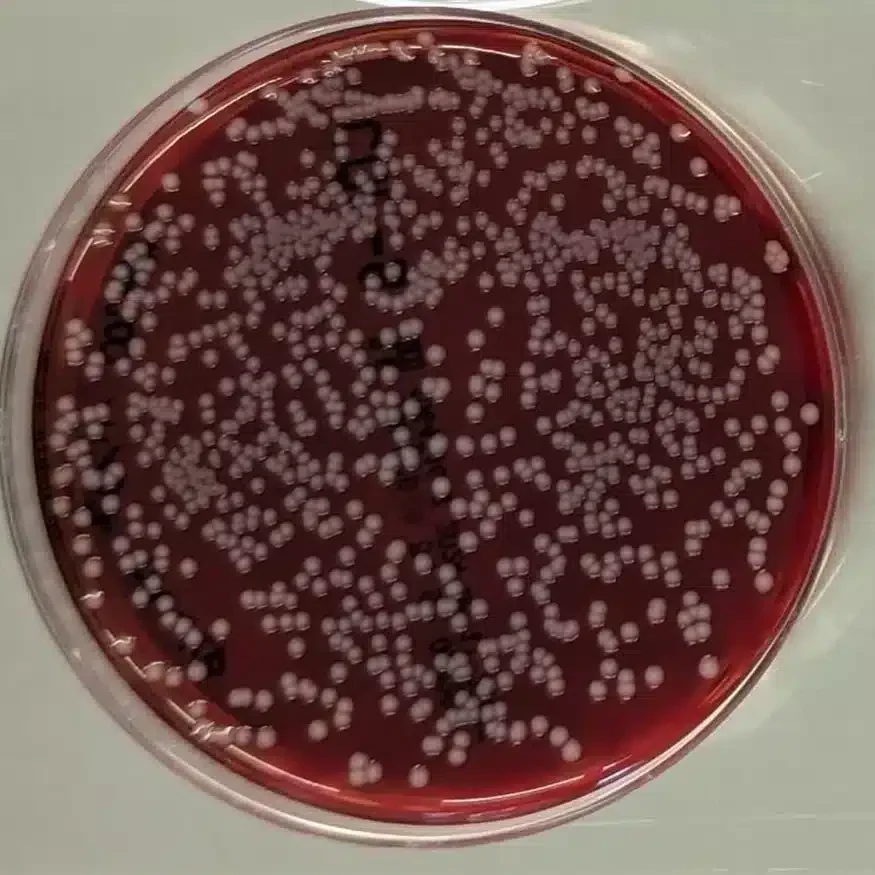 Control
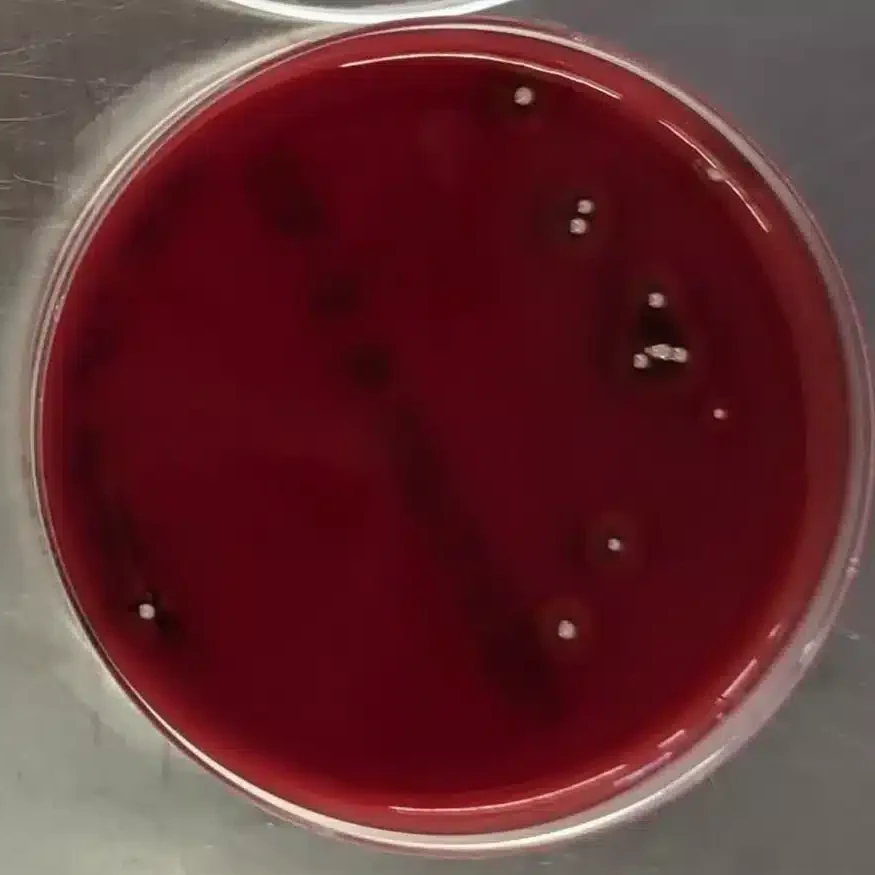 After 3 min of cold plasma
Cold plasma for chronic wounds
In Germany, cold plasma is used mainly for chronic and infected wounds as an adjunct to wound care. Since 2022, there has been a German S2k guideline on the therapeutic use of cold plasma, listed in the AWMF register under number 007-107.[12] In addition to the antimicrobial effect, a recent review names increased blood flow in the skin and stimulation of cell division as possible mechanisms of action.[8]
In a randomized, placebo-controlled study from Bad Oeynhausen and Karlsburg, 62 diabetic foot wounds received eight sessions of cold plasma or a placebo treatment in addition to standard treatment. With cold plasma, the wounds shrank significantly more and reached a relevant reduction in size faster. Infections and microbial load, however, did not decrease more than with placebo.[13]
The studies on cold plasma are still small. Cold plasma complements wound care. It replaces neither the treatment of the underlying cause of a wound nor antibiotic therapy when an infection spreads.
Can bacteria become resistant to cold plasma?
Resistance to cold plasma has not been described so far, but it cannot be ruled out. A review describes how bacteria can survive cold plasma treatment better through adaptations (tolerance).[9]
The reason given for resistance developing less easily is the type of attack: an antibiotic usually acts on a specific target structure, which can change through a single mutation. Cold plasma, by contrast, attacks the cell at many sites simultaneously.
Tolerability for human tissue
Why does cold plasma damage bacteria more than human cells? The usual explanation is that human cells are better protected against oxidative stress:
What protects human cells
- Firm tissue structure:Human cells are embedded in tissue and protect each other.
- Stabilized membranes:Embedded cholesterol makes the cell membranes resilient.
- Antioxidant protective systems:Enzymes such as catalase and superoxide dismutase break down reactive oxygen species.
In the study on diabetic foot wounds mentioned above, no treatment-related side effects occurred.[13] Use is governed by the intended purpose and the instructions for use of the respective medical device. Read more about risks and tolerability on the page Safety and side effects.
When the inside of the body is affected
Cold plasma acts only where it hits, that is, on the surface of the skin and wounds. For infections inside the body, such as a bladder infection or bronchitis, other approaches can be considered to reduce antibiotic use.
Plant-based active substances
For mild, uncomplicated infections of the respiratory or urinary tract, herbal medicines are also used. In an analysis of German practice data from more than 117,000 patients with acute respiratory infections, antibiotics were prescribed less often in the further course after initial treatment with certain phytopharmaceuticals, such as extracts of pelargonium root or thyme.[14] Such an analysis shows an association but does not prove an effect. The evidence differs depending on the product.
Examples
- Mustard oil glycosides from nasturtium and horseradish:In a non-randomized observational study with 858 children and adolescents with acute sinusitis, bronchitis or bladder infection, symptoms improved to a similar extent with a preparation of nasturtium herb and horseradish root as with standard antibiotics. The first author worked for the manufacturer.[15]
- D-mannose:
- Allicin from garlic:In the laboratory, this active substance from garlic also inhibited multidrug-resistant pathogens that cause lung infections. Whether this helps with infections has not been clinically proven.[18]
Herbal remedies can be an option for mild infections. They do not replace antibiotics for serious bacterial infections.
Phage therapy: Precise, but still rare
Bacteriophages, or phages for short, are viruses that infect only bacteria. They inject their genetic material into the pathogen, multiply inside it and finally break it open. Phage therapy is considered a promising approach against resistant pathogens.[19]
Phages are usually specialized in certain bacterial species or strains and therefore largely spare the rest of the microbiome. In Georgia, for example at the Eliava Institute in Tbilisi, they have been used for decades. In Germany, phages are not approved as medicinal products.[20] They are used only in a few hospitals as individual treatment attempts, and high-quality evidence from randomized trials is still lacking.[19]
When antibiotics are indispensable
In the following situations, prompt antibiotic therapy that acts throughout the body is vital:
Antibiotics are indispensable here
Developing or established sepsis (blood poisoning) · severe pneumonia with confirmed bacterial cause · bacterial meningitis · severe kidney infection (pyelonephritis)
A prescribed antibiotic is taken at the dose and for the duration determined by the doctor. Leftover tablets should not be taken later on your own initiative.
The boundary between local and systemic infection is fluid. If a wound infection spreads, for example with increasing redness, swelling or fever, prompt medical assessment is necessary. Local methods then do not replace antibiotic therapy.
Conclusion
There is no universal alternative to antibiotics. For mild infections of the respiratory and urinary tract, herbal remedies can be an option, but the evidence differs depending on the product. Bacteriophages are being researched and have so far been used in Germany only in individual cases. Serious infections still require antibiotics.
On the skin and in wounds, cold plasma is a physical method that can complement wound care. In the laboratory, it acts against a broad spectrum of pathogens, including antibiotic-resistant ones. The clinical studies so far are small. Resistance to cold plasma has not been described so far, but it cannot be ruled out.
Listen further: New paths in medicine beyond established drugs are the topic of an episode of the Viromed podcast on Spotify.
Frequently asked questions about alternatives to antibiotics
Can bacteria such as MRSA become insensitive to cold plasma?
Resistance to cold plasma has not been described so far, but it cannot be ruled out. Cold plasma attacks pathogens at several sites simultaneously, which is likely to make the development of resistance more difficult. In the laboratory, however, it has been observed that bacteria can survive treatment better through adaptation.
Does cold plasma also work against viruses and fungi?
In laboratory experiments, cold plasma is also effective against fungi and certain viruses. How well this helps with infections of the skin and wounds has been less well studied clinically. Infections inside the body cannot be treated with cold plasma.
Can cold plasma replace antibiotics?
No. Cold plasma acts only locally on the skin and wounds and is used there as an adjunct to wound care. If an infection spreads or affects the inside of the body, antibiotics are still needed.
Is application on open wounds painful?
With handheld devices, cold plasma is usually applied without contact; many people feel only a slight draft or a tingling sensation. In the study on diabetic foot wounds, participants perceived treatment with cold plasma and with a placebo device similarly, and no treatment-related side effects occurred. Read more on the page Safety and side effects.
This article provides information on physical, microbiological and herbal therapeutic approaches and does not replace medical advice. Febrile, systemic or acutely life-threatening infections require immediate medical attention.
Viromed editorial team
Viromed Medical editorial team. Based on the 2025 WHO report on antibiotic resistance, the GBD analysis in The Lancet (2024) and studies on cold plasma, plant-based active substances and phage therapy.