ViroCAP derma
Cold plasma for dermatology
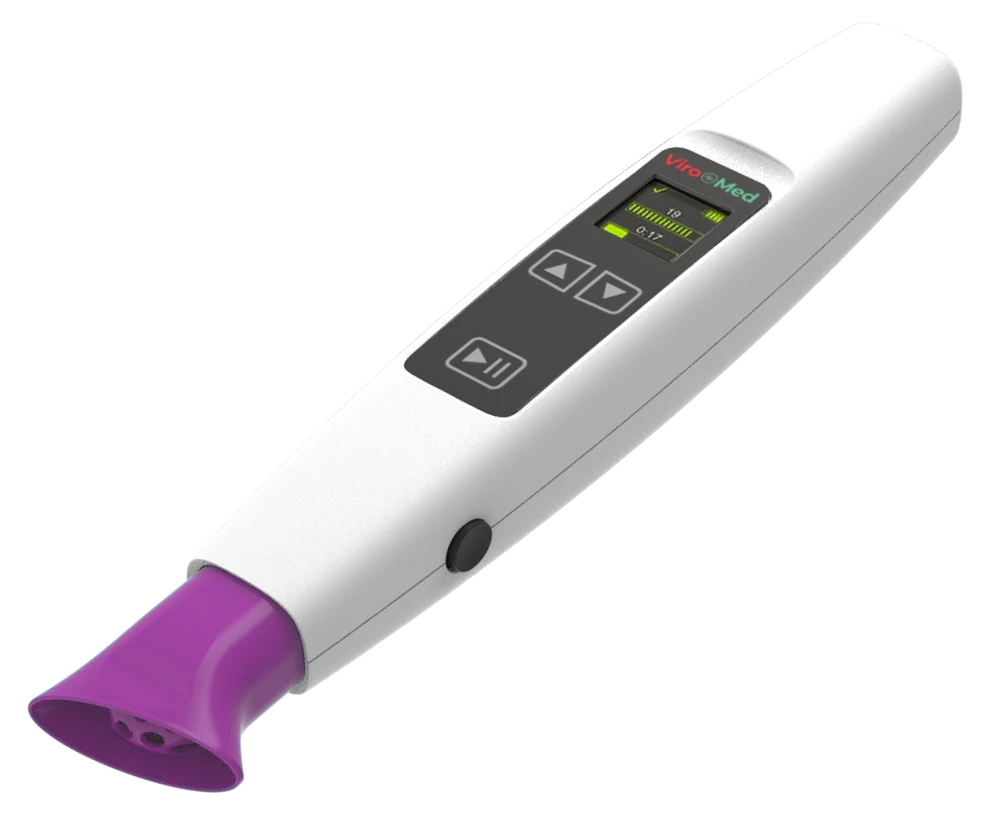
Mobile handheld device for professionals in practices and hospitals.
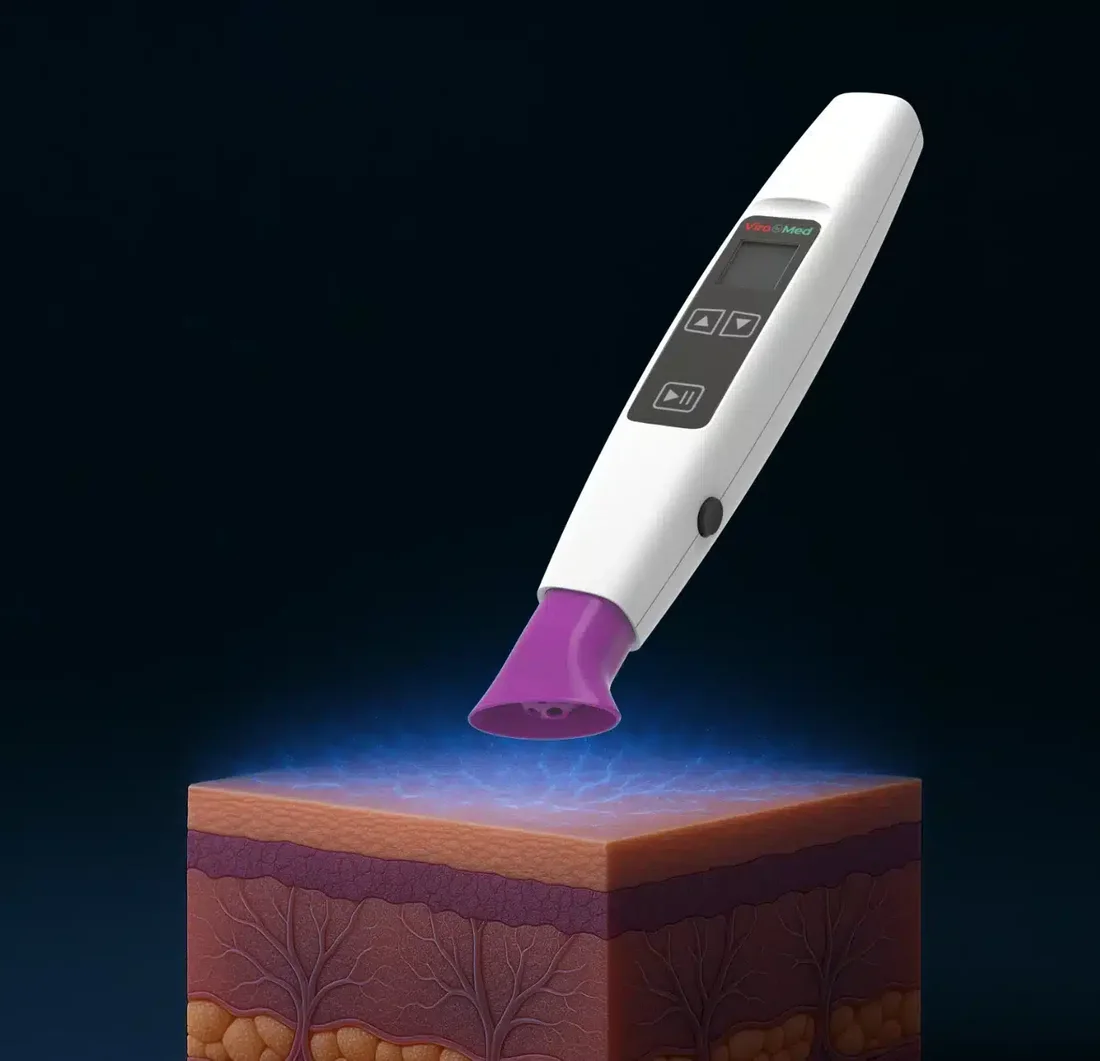
- Applied without direct skin contact
- 1 or 2 minutes, selected at the push of a button
- Weighs just 160 g, up to 45 applications per battery charge
Currently not available to order
How cold plasma acts on the skin
Cold atmospheric plasma can influence how skin cells respond to an injury. In a laboratory model, cells of the epidermis migrated into a gap in the cell layer faster after a short plasma treatment. This cell migration is one step in wound closure.[1]
Cold plasma also acts on bacteria. In studies on human skin, the application reduced the number of detectable bacteria.[2] Other studies examined the effect on multidrug-resistant pathogens.[3, 4]
In my view, cold plasma therapy belongs in every practice.

Treatment procedure
- 1
Prepare the skin and device
Clean the skin area manually. Take the handheld device out of the charging cradle and attach the spacer.
- 2
Set the treatment time
Select 1 or 2 minutes at the push of a button.
- 3
Start the application
Hold the handheld device with the spacer attached about 5 mm above the skin. Start the application at the push of a button.
- 4
Move on to the next skin area
A signal sounds every 30 seconds. You can then move the device on to the next skin area.
- 5
Finish the application
Dispose of the spacer. If required, you can then apply an ointment or serum containing an active ingredient.
Spacer service life
The selected treatment time determines how many applications are possible within the 20 minutes.
20 min
from the start of the first application
20 ×
of 1 minute each
or
10 ×
of 2 minutes each
Planned indications
- Acne vulgaris
- Dermatophytosis (tinea)
- Perioral dermatitis
- Atopic dermatitis (eczema)
- Soft tissue infections (folliculitis, furuncles, abscesses)
- Actinic keratosis
- Viral skin diseases with bacterial superinfection (e.g. herpes labialis)
- Impetigo contagiosa
- Pityriasis versicolor (tinea versicolor)
References
- Marches, A. et al. Cold Atmospheric Plasma Jet Treatment Improves Human Keratinocyte Migration and Wound Closure Capacity without Causing Cellular Oxidative Stress. Int. J. Mol. Sci. 2022, 23 (18), 10650.https://doi.org/10.3390/ijms231810650
- Daeschlein, G. et al. Skin Decontamination by Low-Temperature Atmospheric Pressure Plasma Jet and Dielectric Barrier Discharge Plasma. J. Hosp. Infect. 2012, 81 (3), 177–183.https://doi.org/10.1016/j.jhin.2012.02.012
- Hoon Park, J. et al. Comparative Study for the Inactivation of Multidrug Resistance Bacteria Using Dielectric Barrier Discharge and Nano-Second Pulsed Plasma. Sci. Rep. 2015, 5 (1), 13849.https://doi.org/10.1038/srep13849
- Daeschlein, G. et al. Skin and Wound Decontamination of Multidrug-Resistant Bacteria by Cold Atmospheric Plasma Coagulation. J. Dtsch. Dermatol. Ges. JDDG 2015, 13 (2), 143–150.https://doi.org/10.1111/ddg.12559
Interested in ViroCAP derma?
Would you like to learn more about cold plasma in dermatology? ViroCAP derma is currently not available to order. Our team will be happy to advise you personally and answer all your questions about areas of use, handling and cost-effectiveness.
Phone
Advice
Orders